
KEY HIGHLIGHTS
- In 2026, governments are leaning harder on AI while citizens question how much control is too much.
- Singapore-style cash support schemes remain a lifeline as living costs stay high.
- The real issue isn’t technology itself, but how it affects trust, dignity, and daily life.
Will Singaporeans receive a $1,200 cash payout in 2026? Learn the latest updates, eligibility criteria, payment timelines, and how government support schemes work in Singapore.
Why the $1,200 Cash Payout Matters in 2026
Rising living costs, higher GST, and global economic uncertainty have made government cash payouts a critical lifeline for many Singapore households. As discussions around the Singapore $1,200 cash payout in 2026 gain traction online, many residents are asking:
- Is the $1,200 payout confirmed?
- Who is eligible?
- When will payments be made?
- How do Singapore government cash assistance schemes work?
This guide explains what the $1,200 cash payout really means, how it may be structured based on past policies, and how to check whether you qualify — using official Singapore government frameworks only.
Is the Singapore $1,200 Cash Payout in 2026 Confirmed?
As of now, there is no single scheme officially named “$1,200 Cash Payout 2026.” However, the figure $1,200 commonly appears because it reflects the combined value of multiple government support schemes that eligible Singaporeans may receive throughout the year.
Historically, cash support has been delivered through stacked benefits, including:
- Assurance Package (AP) Cash
- Cost-of-Living (COL) Special Payments
- GST Voucher (Cash)
- CDC Vouchers (household-based)
- U-Save and S&CC Rebates (utilities & conservancy)
When combined, lower- to middle-income Singaporeans may receive up to or exceeding SGD 1,200 in total support during a calendar year.
Why Singapore Continues Cash Payouts in 2026
1. Cost of Living Pressures
- Higher food and energy prices
- Increased GST (9%)
- Global inflation spillover
2. Wage Transition & Workforce Support
- Support for lower-wage workers
- Cushioning CPF and income adjustments
3. Household & Elderly Assistance
- Targeted relief for seniors
- Support for families with children
These payouts are part of Singapore’s long-term fiscal strategy, managed by the Ministry of Finance, to ensure sustainability without compromising reserves.
Breakdown: Where the $1,200 Comes From
Below is a realistic breakdown of how eligible Singaporeans may receive up to SGD 1,200 or more in 2026.
1. Assurance Package (Cash)
- Introduced to offset GST increases
- Paid directly to eligible citizens
- Amount varies by income and property ownership
Estimated payout: SGD 200–600
2. GST Voucher – Cash Component
The GST Voucher scheme helps lower- and middle-income Singaporeans cope with GST expenses.
Eligibility depends on:
- Assessable income
- Annual value of home
- Citizenship status
Estimated payout: SGD 250–450
Administered by Inland Revenue Authority of Singapore.
3. Cost-of-Living Special Payments
Special one-off payments introduced during periods of high inflation.
- Typically announced during Budget
- Paid automatically to eligible citizens
Estimated payout: SGD 200–400
4. CDC Vouchers (Household Support)
- Issued to households (not individuals)
- Usable at heartland shops and supermarkets
- Digital vouchers via Singpass
Estimated value: SGD 300–500 per household
(Administered with support from People’s Association)
Who Is Eligible for Cash Payouts in 2026?
While exact criteria may vary by scheme, general eligibility rules include:
Citizenship
- Must be a Singapore Citizen
- PRs and foreigners are not eligible
Income Threshold
- Assessable income typically ≤ SGD 100,000
- Higher payouts for lower-income individuals
Property Ownership
- Living in 1 property only
- Annual Value (AV) below specified limits (e.g. ≤ SGD 21,000)
Age
- Some payouts apply to 21 years and above
- Seniors may receive enhanced benefits
When Will the Cash Payouts Be Paid?
Based on past payout schedules:
| Scheme | Expected Timeline |
|---|---|
| Assurance Package Cash | Q1–Q3 2026 |
| GST Voucher (Cash) | August 2026 |
| COL Special Payment | Mid-2026 |
| CDC Vouchers | Rolled out in phases |
Payments are usually credited via:
- PayNow-NRIC
- Direct bank credit
- GovCash (last resort)
How to Check If You’re Eligible
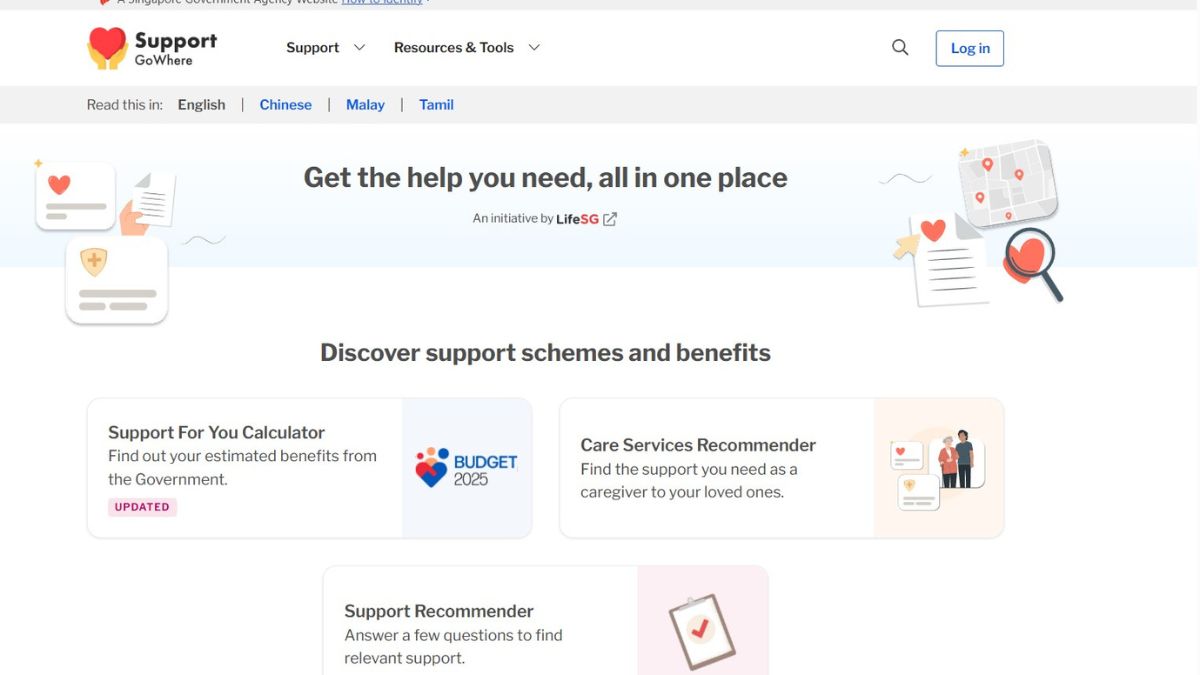
You can verify your eligibility through official platforms:
- Log in with Singpass
- Visit official government benefit portals
- Check notifications via SMS or mail
Never rely on unofficial WhatsApp messages or social media claims.
Common Scams to Watch Out For
Scammers often exploit payout announcements.
Government will never ask for:
- OTPs
- Bank passwords
- Payment to “unlock” payouts
Always verify information on official .gov.sg websites.
How the $1,200 Payout Impacts Your Personal Finances
Smart Ways to Use the Cash
- Offset daily expenses
- Reduce credit card balances
- Build emergency savings
- Pay insurance premiums
Not Taxable Income
Government cash payouts:
- Are not taxable
- Do not affect CPF contributions
- Do not reduce other benefits
Frequently Asked Questions (People Also Ask)
Is the $1,200 cash payout guaranteed?
No single payout is guaranteed, but eligible citizens may receive combined benefits totaling around SGD 1,200.
Do I need to apply?
Most schemes are auto-assessed. Applications are only required in special cases.
Will seniors receive more?
Yes. Seniors typically receive higher payouts and additional supplements.
Can PRs or foreigners get the payout?
No. These payouts are for Singapore Citizens only.
Will payouts continue after 2026?
Likely, depending on economic conditions and Budget announcements.
Conclusion: What Singaporeans Should Expect in 2026
While there is no standalone “Singapore $1,200 Cash Payout 2026,” eligible citizens can realistically receive this amount or more through multiple government support schemes.
The key takeaway:
- Stay informed through official sources
- Ensure your PayNow-NRIC is linked
- Be alert to scams
- Plan wisely to maximise the benefit
Singapore’s targeted cash support continues to play a crucial role in protecting household finances while maintaining long-term fiscal stability.
Sources (Official Singapore Government Websites)
- https://www.mof.gov.sg
- https://www.govbenefits.gov.sg
- https://www.iras.gov.sg
- https://www.supportgowhere.gov.sg