
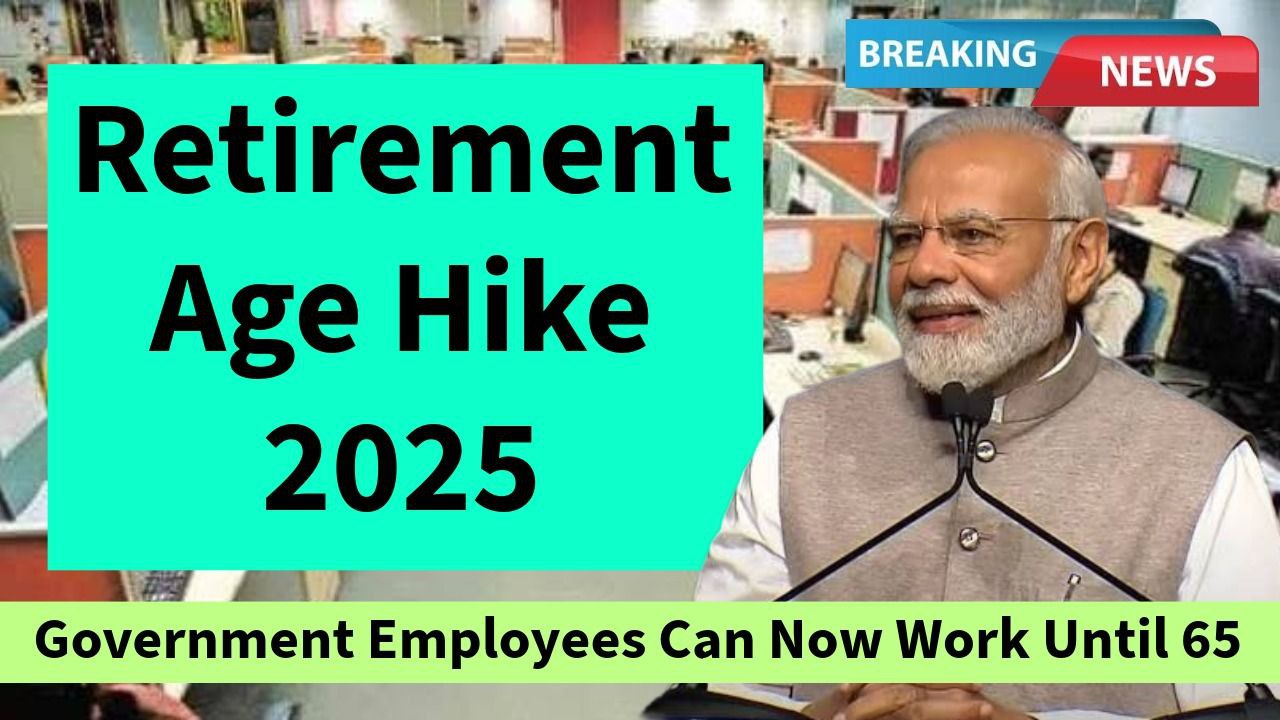
Retirement Age Hike 2025: The central government is reportedly planning a major policy shift that could significantly benefit millions of government employees across India. As per new discussions and proposals, the retirement age for government employees may soon be increased from 60 to 65 years. This move aims to address workforce shortages, enhance administrative efficiency, and make better use of experienced personnel within various departments.
This development has already created a wave of excitement among employees nearing retirement and has become a trending topic of discussion across ministries and state departments.
Why the Retirement Age Hike Is Being Considered
The decision to extend the retirement age has been under review for quite some time. Several factors are driving this consideration:
- Increasing Life Expectancy: The average life expectancy in India has risen significantly over the past decades, now crossing 70 years. Many employees are fit and capable of contributing productively even after turning 60.
- Retaining Skilled Workforce: Government departments often struggle with a shortage of experienced officers and technical staff. Retaining employees for an additional five years could help bridge this gap while allowing smooth mentorship for younger recruits.
- Reducing Pension Burden (Short-Term): Though a long-term pension impact exists, increasing the retirement age temporarily reduces the number of people drawing pensions and delays the payout timeline.
- Administrative Continuity: In sectors like education, health, and engineering, continuity is crucial. Experienced professionals ensure that ongoing projects and initiatives don’t lose momentum due to frequent retirements.
Expected Benefits for Government Employees: Retirement Age Hike 2025
If implemented, the hike will benefit both central and state government employees. Here are the major advantages:
- Extended Service Period: Employees will have an additional five years of stable income and benefits.
- Increased Pension & Gratuity: With longer service comes higher pension benefits and increased gratuity amounts.
- More Time for Career Growth: Senior employees can continue contributing and may even get higher positions or promotions before retirement.
- Financial Stability: The move can provide better financial security for employees and their families, especially in the face of rising living costs.
How This Policy Will Affect the Job Market: Retirement Age Hike 2025
While this decision favors current employees, there are concerns about its impact on new job seekers. Extending the retirement age might slow down fresh recruitment for several years. However, government sources suggest that strategic recruitment planning will continue to ensure that new talent enters the system gradually.
Some experts believe that instead of blanket implementation, the hike could be department-specific, depending on the workforce demand and skill needs.
Proposed Implementation Details: Retirement Age Hike 2025
According to insider reports, the government may adopt a phased approach:
- Employees in critical departments like healthcare, education, defense, and administration could be the first to receive the benefit.
- The policy might begin with an optional retirement clause, allowing employees to choose whether to retire at 60 or continue till 65.
- The new rule is expected to be implemented through an official notification after approval by the Union Cabinet.
There is also speculation that this may coincide with upcoming reforms in the pension structure and employee productivity evaluation systems.
Comparison with Other Sectors: Retirement Age Hike 2025
India’s private sector and public sector undertakings (PSUs) have varied retirement ages, typically ranging from 58 to 62 years. In contrast, several developed nations, including Japan and the U.S., already allow employees to work beyond 65, depending on their health and performance.
This proposed reform aligns India with global employment trends where experience-based retention is prioritized over age-based exits.
Reactions from Employee Unions and Experts: Retirement Age Hike 2025
Employee unions have largely welcomed the idea. Many associations argue that the retirement age increase is long overdue, considering inflation and extended life spans. However, some experts caution that the government must balance this policy with youth employment opportunities.
Union representatives also demand that the government improve the working conditions, medical benefits, and post-retirement support systems alongside this change.
Economic and Administrative Impact: Retirement Age Hike 2025
The proposed retirement age hike could influence India’s economy and governance system in several ways:
- Reduced Immediate Pension Outflow: It will help the government save funds temporarily by delaying pension liabilities.
- More Experienced Administration: Departments will retain seasoned officials who can guide reforms effectively.
- Balanced Recruitment Planning: Though recruitment may slow down, it will become more targeted and skill-based.
- Boost in Productivity: With updated training and digital tools, older employees can continue contributing efficiently.
Possible Challenges: Retirement Age Hike 2025
Despite the positives, there are challenges the government must consider:
- Youth Employment Pressure: With millions of graduates entering the job market yearly, delayed retirements could reduce the number of vacancies available to new entrants.
- Health and Productivity Concerns: Employees over 60 may face health-related limitations. The government might need to introduce flexible or part-time roles for them.
- Departmental Restructuring: The HR systems within ministries will need to adapt to new service rules, evaluation standards, and promotion guidelines.
- Increased Salary Expenditure: Longer service periods mean additional years of salary, dearness allowance, and other benefits that the government must account for.
What Employees Should Expect Next: Retirement Age Hike 2025
Employees approaching retirement should stay informed through official government notifications. The policy is still under consideration, and the final decision will likely depend on reports from expert committees and discussions with employee associations. If approved, the new rule could come into effect in phases starting 2025, giving departments enough time to restructure service rules and human resource planning.
Conclusion: Retirement Age Hike 2025
The Retirement Age Hike 2025 represents one of the most significant administrative reforms in recent years. Allowing government employees to serve until 65 could improve efficiency, preserve institutional knowledge, and provide better financial security for millions of workers. However, the government must implement this reform carefully, ensuring that it doesn’t create an imbalance in the employment ecosystem or hinder the entry of young professionals. With India moving rapidly toward becoming a $5 trillion economy, such workforce reforms could strengthen the foundation of its governance system balancing experience with opportunity and sustainability.
Read Also: PM Jan Dhan Yojana 2025 Brings ₹10,000 Credit Relief for Account Holders – Know Benefits