
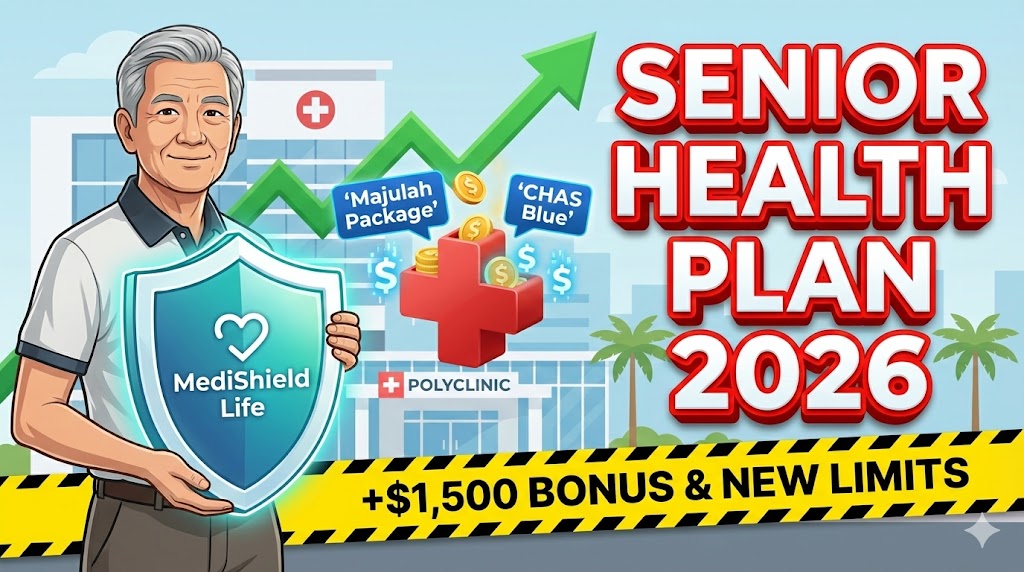
Healthcare costs in Singapore continue to rise as the population ages. By 2026, 1 in 4 Singaporeans will be aged 65 and above, making healthcare cost planning a critical issue for seniors and their families.
For many older Singaporeans, medical expenses are not a one-time concern — they are ongoing, unpredictable, and potentially expensive. Chronic illnesses, hospital stays, outpatient treatments, and long-term care can quickly add up if not planned properly.
This guide explains healthcare cost planning for seniors in Singapore in 2026 in a simple, practical, and realistic way, using real examples, current subsidy structures, and Singapore-specific healthcare schemes — so you can plan with confidence and protect your retirement savings.
What Healthcare Costs Do Seniors Commonly Face in Singapore?
Before planning, it’s important to understand where the money actually goes.
1. Outpatient & Primary Care Costs
Most seniors require frequent outpatient care for chronic conditions such as:
- Diabetes
- High blood pressure
- High cholesterol
- Arthritis
Typical cost (before subsidies):
- Polyclinic visit: SGD 15–30
- Private GP visit: SGD 40–80
- Chronic medication (monthly): SGD 50–300
While subsidies help, these costs are recurring for life.
🔗 Related Guides
2. Hospitalisation Costs
Hospital stays are the biggest financial risk.
Estimated hospitalisation costs (before insurance):
- Public hospital (Class B2/C): SGD 1,000–3,000 per stay
- Public hospital (Class B1/A): SGD 4,000–10,000+
- Private hospital: SGD 10,000–30,000+
Even a short stay can significantly impact retirement savings if insurance coverage is insufficient.
3. Long-Term Care & Post-Hospital Care
As seniors age, long-term care becomes more likely.
Examples include:
- Community hospitals
- Day care centres
- Home nursing
- Nursing homes
Monthly costs (before subsidies):
- Home care: SGD 300–1,200
- Nursing home: SGD 2,000–4,000+
Key Government Healthcare Schemes Seniors Must Understand (2026)
Singapore’s healthcare system is strong — but only if you know how to use it properly.
MediShield Life: Your Core Hospitalisation Coverage
MediShield Life is compulsory for all Singaporeans and PRs.
It covers:
- Large hospital bills
- Selected outpatient treatments (e.g. dialysis, chemotherapy)
However, MediShield Life does not cover everything. Deductibles and co-insurance still apply.
👉 Real Example:
Mr Tan, 72, was hospitalised for pneumonia.
- Total bill: SGD 8,500
- MediShield Life payout: SGD 5,600
- Amount paid using CPF Medisave & cash: SGD 2,900
Without planning, this would directly reduce his retirement funds.
CPF Medisave: Your Medical Savings Account
Central Provident Fund Medisave can be used for:
- Hospital bills
- MediShield Life premiums
- Approved outpatient treatments
But Medisave has withdrawal limits.
⚠️ Many seniors wrongly assume Medisave is unlimited — it is not.
Government Subsidies & CHAS
Means-tested subsidies can reduce costs significantly.
Examples:
- Polyclinic subsidies up to 75%
- Community hospital subsidies up to 80%
- CHAS cards for private GP and dental care
Subsidies depend on household income and property ownership, so planning early matters.
Integrated Shield Plans (IPs): Are They Worth It for Seniors?
Integrated Shield Plans provide higher coverage than MediShield Life, including:
- Private hospital access
- Lower out-of-pocket costs
However, premiums increase sharply with age.
Example (2026 estimate):
- Age 70 IP premium: SGD 1,200–2,500/year
- Age 80 IP premium: SGD 3,000–5,000+/year
👉 Planning tip:
If premiums become unaffordable later, downgrading early can prevent coverage gaps.
Real-Life Healthcare Cost Planning Examples (Singapore Seniors)
Example 1: A Well-Planned Senior
Madam Lim, 68
- Uses polyclinics instead of private GPs
- Maintains MediShield Life + basic IP
- Has SGD 40,000 in Medisave
Outcome:
- Chronic care mostly covered by subsidies
- Hospitalisation costs manageable
- Retirement savings preserved
Example 2: Poor Planning, High Stress
Mr Goh, 75
- No Integrated Shield Plan
- Relies on private specialists
- Low Medisave balance
Outcome:
- Paid SGD 12,000 cash for surgery
- Needed family support
- Retirement lifestyle downgraded
How Much Should Seniors Budget for Healthcare in 2026?
A practical planning benchmark:
| Category | Annual Estimated Cost |
|---|---|
| Outpatient & medication | SGD 1,500–3,000 |
| Insurance premiums | SGD 800–3,000 |
| Emergency buffer | SGD 10,000–20,000 |
👉 Recommended:
Set aside 15–20% of retirement funds specifically for healthcare.
Smart Healthcare Cost Planning Tips for Seniors & Families
✔ Use Subsidised Care First
Public healthcare delivers excellent outcomes at lower cost.
✔ Maintain Sufficient Medisave
Top up early if possible — medical inflation is real.
✔ Review Insurance Annually
Coverage needs change as health conditions evolve.
✔ Plan With Family Involvement
Children can use CPF to support parents under approved schemes.
Frequently Asked Questions (People Also Ask)
How much does healthcare cost for seniors in Singapore?
On average, seniors may spend SGD 3,000–6,000 per year, excluding major hospitalisation events.
Is MediShield Life enough for seniors?
It provides essential coverage, but out-of-pocket costs still apply, especially for higher ward classes.
Can seniors still buy insurance after 70?
Yes, but premiums are significantly higher and coverage may be limited.
What happens if a senior cannot afford medical bills?
Subsidies, Medifund assistance, and family support schemes may help, but early planning reduces reliance on aid.
Conclusion: Plan Early, Age With Dignity
Healthcare cost planning for seniors in Singapore in 2026 is not about fear — it’s about control, dignity, and financial stability.
With the right mix of:
- Government schemes
- Smart insurance choices
- Realistic budgeting
- Family coordination
Singapore seniors can enjoy their later years without medical bills becoming a financial burden.
Early planning always costs less than late emergencies.
Sources (Official Singapore Government Websites)
- Ministry of Health – https://www.moh.gov.sg
- CPF Board – https://www.cpf.gov.sg
- LifeSG & Healthcare Subsidies – https://www.life.gov.sg
- MediShield Life – https://www.moh.gov.sg/healthcare-schemes-subsidies/medishield-life